

close
Choose Your Site
Global
Social Media


Views: 0 Author: Site Editor Publish Time: 2026-11-26 Origin: Site


Specifying the wrong electrical conduit carries severe consequences on any job site. You risk failed inspections, compromised wire integrity, and shockingly expensive project rework. Electrical contractors and engineers constantly face a core challenge during the design phase. They must balance the rugged physical protection of rigid infrastructure against the routing efficiency of flexible alternatives. Getting this balance right keeps projects on schedule. It also keeps them within budget.
We built this comprehensive guide to help you navigate these materials effectively. You will discover an evidence-based comparison of rigid and flexible non-metallic conduits. Buyers, project managers, and contractors can use this data directly. It helps you specify the exactly correct material. We explore NEC compliance, environmental factors, and total installation costs. This information ensures your next build succeeds safely and efficiently.
Rigid PVC provides maximum impact resistance and is the industry standard for direct direct burial, concrete encasement, and exposed runs requiring high structural integrity.
Flexible PVC excels in high-vibration environments (e.g., motor connections) and complex routing scenarios where rigid bending is cost-prohibitive or physically impossible.
Material costs for rigid conduit are generally lower, but flexible conduit often offsets its higher purchase price through significantly reduced labor and fitting requirements.
Final selection must prioritize National Electrical Code (NEC) compliance and local Authority Having Jurisdiction (AHJ) amendments over baseline material costs.
Extruded from unplasticized polyvinyl chloride, this material forms a highly durable enclosure. Manufacturers design it specifically for straight, structurally demanding pathways. It acts as the backbone of many modern electrical systems. Installers rely on Rigid PVC Conduit when maximum physical protection is non-negotiable.
We typically see two main variations of this material used in the field. Understanding their differences prevents costly code violations.
Schedule 40: This variation features a standard wall thickness. Contractors use it extensively for general-purpose direct burial. It also works perfectly for concrete-encased applications where surrounding cement provides additional support.
Schedule 80: This variation features a significantly heavier wall thickness. The National Electrical Code (NEC) mandates it for areas subject to physical damage. You will commonly see it used for above-ground installations in high-traffic commercial zones or industrial floors.
Using rigid materials provides several distinct operational advantages for infrastructure longevity.
Superior crush resistance and tensile strength protect internal conductors from accidental blunt impacts.
The material provides excellent defense against corrosive soils, aggressive chemicals, and ambient moisture.
It offers a remarkably long lifespan. It shows minimal degradation when properly UV-stabilized for direct outdoor exposure.
These rugged characteristics make rigid pipe ideal for specific, high-stakes installations.
Underground service entrances and deep trenching projects requiring backfill stability.
Long, straight commercial and industrial cable runs across warehouse ceilings.
Concrete-encased duct banks where significant ground shifting might occur over time.
Sometimes, job sites demand agility over brute strength. Manufacturers create agile solutions using plasticized or geometrically modified materials. These dynamic designs bend easily without requiring cumbersome heat boxes. They often feature a specialized smooth inner wall. This smooth interior makes pulling wires much easier and dramatically reduces friction.
Contractors typically rely on two key variations to solve complex routing problems.
Liquidtight Flexible Nonmetallic Conduit (LFNC): This variation shines in wet or damp locations. It provides a reliable water-tight seal when paired with approved mechanical fittings.
Corrugated PVC Conduit: Installers use this heavily in fiber optic and telecommunications routing. It works exceptionally well for low-voltage applications where teams spool continuous long lengths through architectural voids.
Transitioning to a Flexible PVC Conduit offers distinct installation advantages.
It completely eliminates the need for heat-bending on site. It also drastically reduces the total number of elbows and sweep fittings required for a complete run.
The material naturally dampens vibration. It bridges the gap perfectly between stationary junction boxes and heavily vibrating moving equipment.
It navigates tight architectural constraints easily. It handles complex building retrofits with minimal structural disruption to existing walls.
We highly recommend this agile material for several dynamic applications.
HVAC equipment, outdoor pool pumps, and heavy industrial motor connections.
Complex indoor routing scenarios inside tight ceiling plenums or heavily congested utility walls.
Data and telecom runs requiring continuous, splice-free pathways to preserve delicate signal integrity.
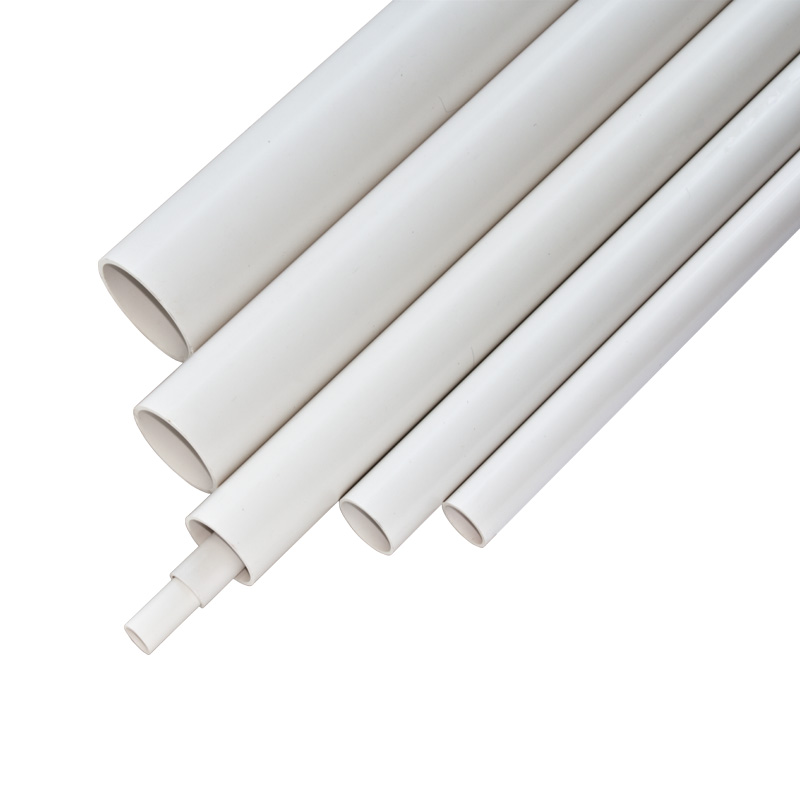
Choosing the right PVC Conduit requires looking beyond the initial sticker price. You must evaluate how material properties directly impact the total project outcome.
Conduit Application and Performance Matrix
Performance Feature | Rigid Extruded PVC | Flexible / Corrugated PVC |
|---|---|---|
Initial Material Cost | Generally lower per linear foot | Generally higher per linear foot |
Labor Intensity | High (requires cutting, deburring, cementing) | Low (fewer fittings, easy continuous runs) |
Crush & Impact Resistance | Excellent (especially Schedule 80) | Moderate to Low |
Vibration Tolerance | Poor (joints fracture under stress) | Excellent (absorbs mechanical movement) |
Support Intervals | Longer distances permitted between straps | Shorter distances required to prevent sagging |
Rigid materials require cheaper raw components. However, they demand significantly higher labor hours. Electricians spend considerable time measuring, cutting, and deburring the pipes. They must also expertly solvent-cement every individual fitting. Conversely, flexible alternatives carry a higher per-foot material cost. Yet, they drastically reduce installation time. They virtually eliminate fitting dependencies on convoluted routes. The extensive labor savings often entirely offset the premium material price.
Rigid enclosures unequivocally win on impact and crush resistance. They safely shield conductors from errant shovel strikes and heavy vehicle weight. Flexible options cannot match this raw physical strength. However, flex wins decisively on vibration tolerance. It provides superior seismic resilience. It safely absorbs energy to prevent mechanical sheer forces from fracturing delicate junction boxes.
Rigid systems allow for greater distances between support straps. The unyielding, stiff nature of the pipe naturally prevents sagging. Flexible options require much closer support intervals. If you space straps too far apart, the flexible pipe sags under the weight of the interior wires. Sagging places dangerous, pulling stress on the end connectors. This tighter spacing requirement can incrementally increase your overall fastener costs.
Every installation carries inherent risks. Understanding these common pitfalls ensures a safer, completely code-compliant electrical system.
Risk: Rigid systems possess a surprisingly high coefficient of thermal expansion. They grow significantly in the heat and shrink rapidly in the cold. Failure to account for outdoor temperature swings causes serious damage. The pipe may buckle outward or pull out completely from terminal junction boxes.
Mitigation: You must mandate the use of engineered expansion fittings. Install these specialized sliding fittings on any straight runs exposed to significant seasonal temperature variations.
Risk: Improper application of primer and cement on rigid joints remains a frequent inspection issue. Poor welding leads directly to moisture ingress. Water trapped inside the system severely degrades conductor insulation over time.
Mitigation: Demand strict adherence to manufacturer chemical guidelines. Installers must respect specific curing times. They must also strictly observe ambient temperature ranges during the cementing process.
Risk: The corrugated or flexible nature of some conduits can increase internal pulling friction. This excess friction risks tearing the outer wire jacket during long or convoluted pulls. Heavily populated wire pulls magnify this danger exponentially.
Mitigation: You should calculate expected pulling tension well in advance. Always utilize industry-approved wire pulling lubricants. Furthermore, adhere strictly to NEC fill capacity limits. Never overstuff the pipe.
Contractors need a repeatable, objective process for material selection. Use this four-step framework to specify the right product for every installation.
First, evaluate the physical dangers surrounding your proposed electrical route. If the run is subject to heavy physical impact, choose rigid. Vehicular traffic or deep trenching in rocky soil also demands rigid protection. In these harsh environments, default immediately to Schedule 80 or Schedule 40.
Next, look closely at the termination points. Are you terminating at a machine that vibrates continuously? Does the equipment articulate or require frequent maintenance adjustments? If so, rigid pipe will eventually fracture at the connector. You must transition to a flexible alternative for this final connection drop.
Never assume a material is universally approved everywhere. Verify that your specific type of flexible pipe is permitted by local code. The NEC distinguishes carefully between different flexible types (e.g., LFNC-B versus LFNC-A). Check the specific rules for your intended length and location. Continuous lengths exceeding 6 feet often carry very special grounding or strapping rules.
Finally, analyze the geometry of your proposed pathway. For highly convoluted pathways featuring multiple directional changes, do the math. Calculate the cost of rigid fittings alongside the required installation labor. Compare that sum against the premium price of a continuous flexible run. Agility usually wins the cost battle on highly complex routes.
Making the right material choice directly impacts your electrical system's longevity. Remember our core decision criteria. Choose rigid pipe for structural permanence and maximum physical protection. Choose flexible pipe for routing efficiency and vital vibration isolation.
These two materials are not mutually exclusive. Highly optimized electrical systems frequently combine both approaches. Smart designers utilize rigid systems for the primary, protected trunk lines. They then transition seamlessly to flexible drops for individual equipment connections. This hybrid approach maximizes both robust protection and necessary agility.
Before purchasing materials, take proactive steps. We strongly advise you to consult your local electrical inspector, commonly known as the Authority Having Jurisdiction (AHJ). Furthermore, always request specification sheets from your conduit suppliers. Verify crucial UV and temperature ratings before procurement to guarantee a successful, code-compliant installation.
A: While certain LFNC types feature ratings for direct burial, it strictly requires specific manufacturer certifications. You must also secure explicit approval from your local Authority Having Jurisdiction (AHJ). Despite these rare exceptions, rigid Schedule 40 or 80 remains the overwhelmingly preferred and safest choice for underground burial.
A: No. LFNC systems typically utilize specialized mechanical compression fittings to achieve a secure, watertight seal. You do not glue them. Conversely, rigid systems rely entirely on chemical solvent welding, which absolutely requires applying both primer and cement to function correctly.
A: Yes. Manufacturers produce approved transition fittings and adapters specifically designed for this purpose. The best practice involves terminating the rigid pipe securely into a junction box. You then begin the flexible run from that box, ensuring a fully supported system.
A: Warping typically occurs due to intense thermal expansion combined with a lack of proper expansion joints. Direct sunlight heats the plastic, causing it to grow and bow. To prevent this, always specify UV-rated materials for outdoor use and install expansion fittings on long straight runs.


